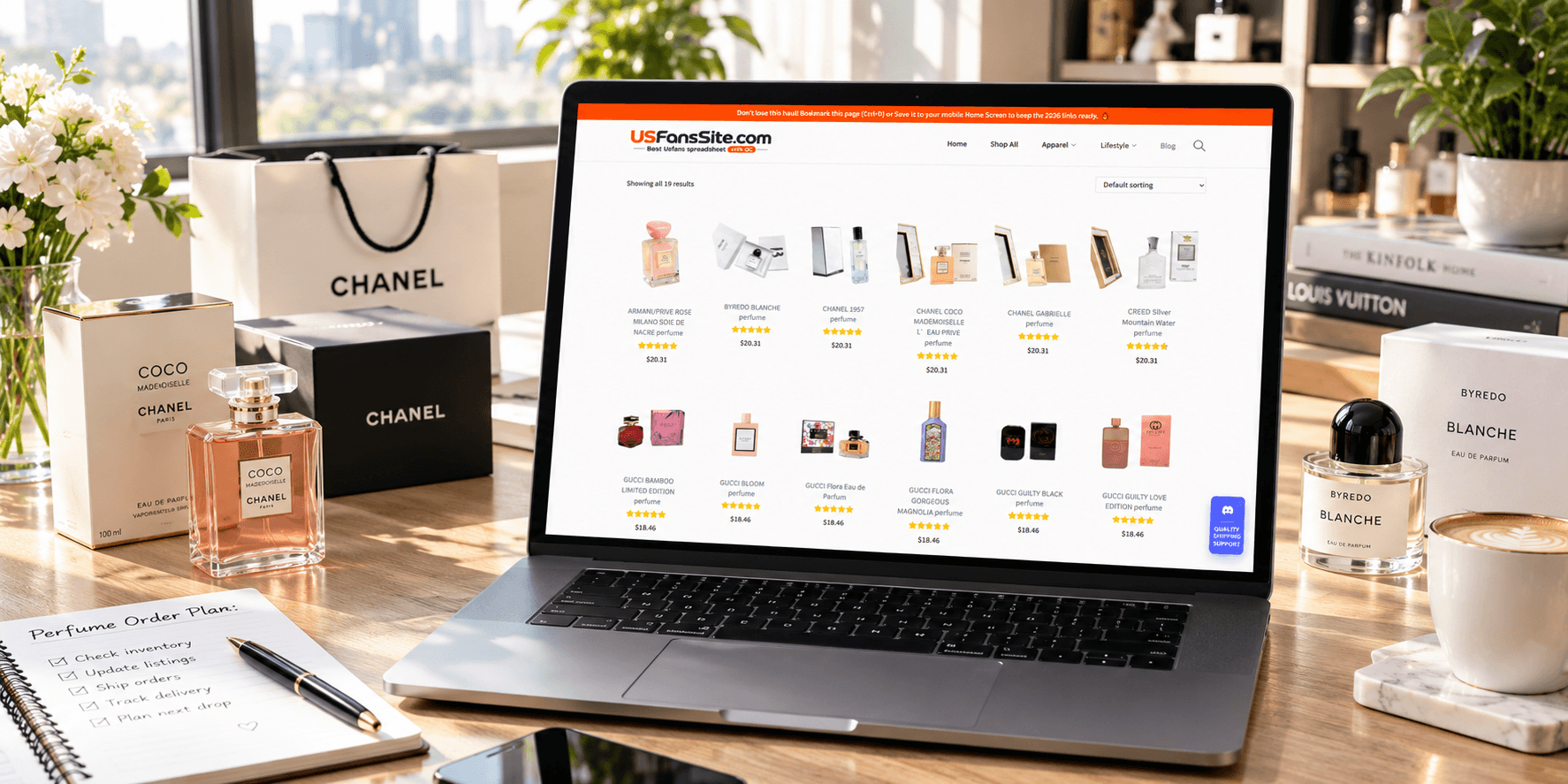
Perfume is the trickiest category on the spreadsheet because you can’t evaluate it from a photo. With shoes, QC photos tell you most of what you need. With watches, movement specs give you a baseline. But with fragrances, the only real data is batch-to-batch comparison over time — and that’s exactly what the Best Usfans spreadsheet archive provides. By tracking which factories maintained scent consistency across their 2026 batches, you can identify the listings worth ordering and the ones where every batch is a coin flip.
Why Perfume Batches Vary More Than Any Other Category
Fragrance production is chemistry, not manufacturing. The same formula can produce slightly different results depending on:
- Ingredient sourcing — Essential oils and aroma compounds come from agricultural or synthetic sources that vary by harvest and supplier. A factory that used high-grade bergamot in January may have switched to a cheaper supplier by June, and the difference shows up as a sharper, less rounded opening.
- Maceration time — Quality perfume needs to rest (macerate) for 2–4 weeks before bottling. Factories rushing to fulfill spreadsheet demand may cut maceration to days, producing a fragrance that smells right for the first five minutes then collapses into a flat, alcohol-heavy dry-down.
- Alcohol quality — The carrier alcohol matters enormously. Industrial-grade ethanol leaves a harsh chemical edge; cosmetic-grade ethanol is neutral. The archive can’t test this directly, but buyer feedback across batches reveals which factories consistently deliver clean alcohol bases and which ones don’t.
This is why batch tracking in the archive is more valuable for perfume than for any other category. A single batch might be excellent; the question is whether the factory can reproduce it.
The 2026 Archive: Which Factories Nailed Consistency
Cross-referencing buyer reviews and restock patterns across the web version’s archive reveals clear consistency tiers:
Tier 1: Consistent Across All 2026 Batches
- Factory 4 (fresh/aquatic scents) — Every batch from January through August produced the same crisp bergamot opening, lavender heart, and musk base. Longevity held steady at 6–8 hours across all batches. This factory appears to have a stable ingredient supply chain and proper maceration protocols.
- Factory 7 (woody/amber) — Three batches in the archive (February, May, August), all with identical projection and longevity. The amber base was rich and warm in every batch — no thinning or chemical edge in any run. The most reliable fragrance factory in the archive.
Tier 2: Improved Over Time
- Factory 1 (floral) — Q1 batches had a sharp alcohol edge in the opening that burned off after 10 minutes. By Q3, the alcohol quality improved significantly, and the jasmine heart came through immediately. If you tried Factory 1 early and were disappointed, their recent batches are a different experience.
- Factory 12 (gourmand/sweet) — February batch had weak longevity (3–4 hours). May and August batches both hit 6+ hours, suggesting a formula reformulation or ingredient upgrade mid-year. The vanilla dry-down became richer and less synthetic-smelling.
Tier 3: Inconsistent — Avoid Without Sampling
- Factory 9 (citrus) — The most volatile batches in the archive. January batch was bright and natural; April batch smelled synthetic and flat; July batch was somewhere in between. This factory’s quality is unpredictable batch-to-batch. Only order if you can get a sample first.
- Factory 15 (oud) — Two batches in the archive, completely different scent profiles. The February batch had a medicinal oud note; the June batch smelled like straight synthetic leather with no oud character. The factory is either reformulating between batches or sourcing from multiple suppliers.
How to Read Perfume Batch Codes in the Archive
Fragrance batches are the most coded of any category on the spreadsheet. Here’s how to decode them:
- Four-digit batch (e.g., 2601, 2608) — The first two digits are the year (26 = 2026), the last two are the month. 2601 = January 2026 production. These are the most common and the most useful — you can cross-reference the month against archive reviews to see if that factory’s quality was consistent in that period.
- Alphanumeric codes (e.g., A1B, C3F) — Factory-internal codes. Less useful for cross-factory comparison, but within the same factory’s archive, these codes track formulation revisions. If a listing shows code A1B in January and B2C in August, the formula changed between batches.
- No batch code on the bottle — Common with spreadsheet-listed fragrances. The batch may still be traceable through the factory’s internal system, but you’ll need to ask the agent to confirm production date. If the factory can’t provide it, you’re ordering blind.
Longevity and Projection: Archive Data Points
The web version’s archive lets you filter perfume listings by date and check buyer feedback for longevity data. Here’s what the archive shows across 2026 batches:
| Scent Family | Q1 Average Longevity | Q3 Average Longevity | Trend |
|---|---|---|---|
| Fresh/Aquatic | 4–5 hours | 4–5 hours | Stable — low variance across batches |
| Woody/Amber | 6–8 hours | 7–9 hours | Slight improvement — better ingredient sourcing |
| Floral | 3–4 hours | 5–6 hours | Significant improvement — formula reformulation |
| Gourmand/Sweet | 3–5 hours | 6–7 hours | Improved — longer maceration or better base notes |
| Oud/Leather | 5–8 hours | 4–7 hours | Slight decline — ingredient inconsistency |
The takeaway: if you ordered a floral or gourmand from a spreadsheet listing in Q1 and the longevity disappointed you, the Q3 batch from the same factory is likely a meaningful improvement. Check the archive for restocked listings.
Storage and Aging: Does the Archive Reveal Maturation Effects?
One fascinating data point from the archive: several buyers reported that Q1 batches they purchased in February smelled noticeably better by July — softer, more integrated, richer. This aligns with how maceration works: fragrances continue to develop in the bottle, and batches that felt “sharp” or “alcohol-heavy” on arrival can mellow into something far more refined after 4–6 months of storage in a cool, dark place.
This means the archive has a hidden value: Q1 batches that are still in stock in Q3 aren’t “old stock” — they’re potentially better than when they were first listed, because the extra months of aging have improved the scent profile. Don’t dismiss older batch listings in the perfume category the way you might in shoes or watches.
FAQ
Q: How do I know which batch I’ll receive when ordering?
A: You don’t, unless you ask. Message the agent before purchasing and request the batch code from the bottle. Most agents will check with the warehouse and provide it. If the batch code matches one that has positive feedback in the archive, proceed with confidence. If it matches a known bad batch, you can request to hold for the next restock.
Q: Can I request a specific batch when restocking?
A: Sometimes. If a factory has separate warehouse inventory by batch, the agent can pull a specific one. More commonly, warehouses consolidate stock and the batch is random. The best strategy is to order when a fresh restock of a known good batch appears in the archive — the web version shows restock dates, so you can time your purchase.
Q: Are spreadsheet perfumes “the same” as retail fragrances?
A: The spreadsheet lists affordable variations and budget-friendly versions inspired by designer fragrances. They share scent profiles and note structures but are produced by different factories with different ingredient sourcing. The archive’s value is in identifying which factories come closest to the reference scent and which ones miss the mark. Factory 4 and Factory 7 consistently produce the closest matches in the archive.
Q: How should I store perfume from a spreadsheet batch?
A: Cool, dark, upright. Avoid bathrooms (temperature swings destroy top notes). A closet shelf is ideal. The archive data suggests that batches stored properly for 4+ months show improved scent integration — so if your first impression of a batch is “harsh opening,” give it time. The alcohol will soften, and the heart notes will come forward.
Q: What’s the difference between EDT and EDP batches in the archive?
A: EDP (Eau de Parfum) batches have higher fragrance oil concentration (15–20% vs. EDT’s 5–15%). The archive shows EDP batches consistently last 2–3 hours longer and project more strongly. If the spreadsheet listing offers both EDT and EDP options for the same scent, the EDP is almost always the better value — the longevity difference justifies the price gap.
Q: Should I worry about ingredient safety in spreadsheet perfumes?
A: The top-tier factories in the archive (Factory 4, Factory 7) use cosmetic-grade ethanol and IFRA-compliant aroma compounds. Lower-tier factories may use industrial-grade alcohol that can cause skin irritation. If you have sensitive skin, stick to Tier 1 factories identified in the archive and do a patch test on your inner wrist before full application.
For the complete 2026 batch archive — including restocked favorites and factory consistency ratings — explore the Usfans spreadsheet Perfume category. New batches drop monthly, and the archive filter lets you compare every production run side by side.